
Invited Speakers
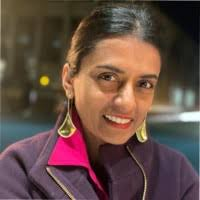
Keynote Speaker: Vidya Setlur, Tableau
Title: ACTG vs 0/1: Discovery, Curiosity, and the Power of Imperfection
Many of humanity’s most important discoveries, from penicillin to X-rays, did not emerge from perfect plans or optimized systems, but from accidents, anomalies, and the curiosity to pursue them. Biological systems, encoded in the language of ACTG, evolve through mutation, variation, and imperfection. Computational systems, built on 0s and 1s, strive for precision, optimization, and deterministic logic. Yet discovery often lies in the tension between these two worlds.
This keynote explores how curiosity, imperfect communication, and unexpected observations shape the process of discovery. Drawing from examples in science, language, and cognition, the talk highlights how insight frequently arises not from eliminating ambiguity, but from engaging with it. Visualization plays a unique role in this process: not simply as a tool for presenting answers, but as a cognitive instrument that provokes questions, reveals anomalies, and supports exploration.
By examining the interplay between biological messiness and computational precision, the talk reflects on how tools and systems might be designed to preserve the conditions for curiosity, experimentation, and creative discovery. The history of innovation suggests that imperfection is not a flaw in the process of discovery; it is often its most powerful catalyst.
“I am delighted if the ideas, figures, or examples in these slides inspire your own work, teaching, presentations, or discussions. If you build upon any of this material, I would greatly appreciate an acknowledgment or citation to the original talk where appropriate. I would also love to hear how you use or adapt these ideas. Please feel free to reach out and share your experiences and feedback.“
— Vidya Setlur
Short Bio: Vidya Setlur is the Senior Director of Tableau Research, where she leads a team exploring data visualization, multimodal interaction, applied machine learning, and natural language processing. She earned her Ph.D. in Computer Graphics from Northwestern University. Her research focuses on how language and semantics can inform meaningful visual depictions of data. Before joining Tableau in 2012, she was a Principal Research Scientist at the Nokia Research Center. Since then, she has contributed to various projects on semantics, data exploration systems, and the company’s first natural language feature, Ask Data. Vidya is the co-author of Functional Aesthetics for Data Visualization and is passionate about mentoring women and other underrepresented communities in technology and research.
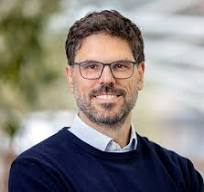
Capstone Speaker: Michael Sedlmair, University of Stuttgart
Title: Vis4Action: From Visual Analysis to Situated, Embodied Action
Visualization has been highly successful at helping users analyze data. But many real-world problems aren’t solved by analysis alone — they require action in context. In this talk, I will reflect on my journey from visualization to VR/AR and human-AI interaction, exploring how data representations can become part of human action — from guiding physiotherapy exercises to learning a musical instrument. Through examples including situated visualization in augmented reality, embodied interaction with haptics, and systems for learning and doing, I will illustrate how visualization can move beyond detached analysis. The result is Vis4Action: a complementary perspective that shifts visualization from analytical representations toward tightly integrated support for real-world action.
Short Bio: Michael Sedlmair is a professor at the University of Stuttgart and leads the research group for HCI and Virtual/Augmented Reality there. He received his Ph.D. degree in Computer Science from the University of Munich, Germany, in 2010. Further stops included the Jacobs University Bremen, University of Vienna, University of British Columbia in Vancouver, and the BMW Group Research and Technology, Munich. His research interests focus on visual and interactive machine learning, perceptual modeling for visualization, immersive analytics and situated visualization, novel interaction technologies, as well as the methodological and theoretical foundations underlying them.